Showing posts with label #globalwarming. Show all posts

Monday, 14 July 2025

Climate Migration: The Rising Tide of Displacement and Its Impact on Urban India

 A Crisis Without Borders

Flooded village, people evacuating belongings in boats.


In recent years, the escalating frequency and intensity of climate-related disasters have added a new category to the global displacement crisis: climate migration. As rising sea levels swallow coastlines, floods drown fertile farmlands, and heatwaves scorch livelihoods, families are increasingly being forced to abandon their ancestral homes and seek refuge in urban areas. While migration has long been a coping mechanism, climate-induced migration is largely involuntary and far more destabilizing—especially for low-income and agrarian communities.

In India, which is among the world’s most climate-vulnerable countries, the issue is particularly acute. From the Sundarbans in West Bengal to the drought-prone Bundelkhand region and the flood-ravaged states of Assam and Bihar, environmental degradation is driving thousands towards megacities like Delhi, Mumbai, and Kolkata—cities already stretched thin. This phenomenon, if not proactively addressed, threatens to unravel both urban and rural social fabrics.


Climate Migration Defined

The Intergovernmental Panel on Climate Change (IPCC) defines climate migration as the movement of people primarily due to sudden or gradual environmental changes that adversely affect their livelihoods. Unlike traditional migration driven by economic opportunity or conflict, climate migration is displacement-by-default. It often results from:

A 2021 report by the World Bank estimates that over 216 million people could become internal climate migrants globally by 2050—nearly 45 million in South Asia alone.


India’s Climate Hotspots: The Push Factors

India's diverse geography makes it vulnerable to a wide range of climate shocks. Key regions facing critical climate stress include:

1. Sundarbans Delta (West Bengal)

Home to one of the largest mangrove forests and low-lying islands, the Sundarbans is witnessing rising salinity, sea-level rise, and frequent cyclones (e.g., Amphan, Yaas). Families are abandoning submerged homes and migrating inland, often to slums in Kolkata.

2. Bundelkhand (Uttar Pradesh & Madhya Pradesh)

This semi-arid region has faced repeated droughts, leading to agricultural collapse, debt, and farmer suicides. Villagers move seasonally or permanently to cities like Jhansi, Delhi, and Bhopal.

3. Assam & Bihar Floodplains

Annual monsoon floods, exacerbated by glacial melt and poor dam management, leave millions displaced each year. Temporary relief camps are common, but long-term rehabilitation is missing.


Urban Destinations: The Pull That Overwhelms

Urban migration, while often perceived as a sign of aspiration, is increasingly becoming a survival tactic. However, Indian cities are ill-equipped to handle such sudden demographic influxes.

1. Housing and Livelihoods

Migrants often end up in informal settlements or slums, without access to piped water, sanitation, or legal rights. For example, Mumbai's Dharavi or Delhi's Yamuna floodplain slums have seen increased climate migrant populations.

2. Strain on Infrastructure

Cities are struggling to manage transport, electricity, waste, and public health services. This not only leads to deteriorating quality of life but also fosters resentment among native populations.

3. Informal Labour Market Exploitation

Migrants frequently work in unregulated, low-paid, high-risk jobs—such as construction, waste picking, and domestic work—with no social security or worker protections.


Social and Psychological Impacts

Urban slum, migrant families at shared tap.


1. Breakdown of Social Networks

Migration severs people from their traditional support systems—community elders, family structures, and cultural institutions. In cities, where social capital is scarce, this isolation can lead to mental health issues and vulnerability to exploitation.

2. Identity and Belonging

Climate migrants often lack formal refugee status and face bureaucratic apathy. Without documentation, they can’t access welfare programs like PDS, MNREGA, or Aadhaar-linked benefits—turning them into invisible citizens.

3. Gendered Impact

Women and children are disproportionately affected. Women face increased unpaid care work, health risks, and sexual violence during and after migration. A study by ActionAid (2022) in Odisha noted a rise in early marriages and school dropouts among displaced girls.


Why Current Policies Fall Short

India lacks a comprehensive climate migration framework. Migration is still viewed through the lens of employment or disaster relief, but not as a structural consequence of climate change.

Existing Gaps:

  • No recognition of “climate migrants” in law

  • No long-term urban resettlement programs

  • Poor integration between disaster response, urban planning, and employment schemes

While the National Disaster Management Authority (NDMA) handles disaster-related displacements, it offers only temporary relief, not long-term rehabilitation.


What Can Be Done: Recommendations for India

To prevent climate migration from becoming a humanitarian crisis, India needs coordinated, forward-looking interventions:

1. Legally Recognize Climate Migrants

Create a formal definition and include them in national and state-level migration and welfare policies. Decentralized registration and Aadhaar portability can help.

2. Strengthen Rural Climate Resilience

Invest in climate-resilient agriculture, water conservation, and green livelihoods to reduce distress migration. The PM-KUSUM scheme and watershed programs need scaling and targeting.

3. Urban Inclusion & Infrastructure Planning

Cities must integrate migrant populations through affordable housing, access to services, and inclusive job creation. Tools like the City Resilience Index and smart city frameworks should explicitly incorporate climate migration scenarios.

4. Community-Based Adaptation

Empower local communities to manage migration through early-warning systems, education, and women-led resource governance.


Global Lessons and the Way Forward

Countries like Bangladesh and Vietnam have initiated planned relocation strategies and climate-resilient village programs. India can draw on such models to build a just transition” framework—where adaptation is not just technical but also socially inclusive and fair.

As the climate crisis accelerates, the notion that urban India can endlessly absorb displaced populations without collapsing is dangerously flawed. Climate migration is not just a rural or environmental issue—it is a national urban planning and human rights challenge. A proactive, rights-based response today will save millions from crisis tomorrow.


Conclusion

Climate migration is reshaping India’s demographic and socio-economic landscape in ways policymakers can no longer ignore. These are not just people on the move—they are climate refugees without borders, facing a future full of uncertainty. Recognizing their plight, strengthening their rights, and redesigning both rural resilience and urban inclusivity must become a national development priority. The climate clock is ticking—and for many, displacement has already begun.

Monday, 23 June 2025

Understanding the Greenhouse Effect: How Earth's Natural Thermostat Works

The Greenhouse Effect is one of the most fundamental mechanisms that regulate Earth’s climate. Without it, our planet would be a frozen wasteland; yet, when amplified by human activity, it becomes the engine driving climate change. This dual role—life-sustaining and potentially life-threatening—makes understanding the greenhouse effect essential for anyone interested in the future of our planet.

This essay explores the greenhouse effect from a scientific and systemic perspective: what it is, how it functions, what gases are involved, the role of feedback mechanisms, and how human activities are altering its balance.


What Is the Greenhouse Effect?

Greenhouse effect illustration.


The greenhouse effect refers to the process by which certain gases in Earth’s atmosphere trap heat, keeping the planet warm enough to sustain life.

The Natural Process

  1. Solar radiation reaches Earth, mostly in the form of visible light.

  2. Earth’s surface absorbs this energy and re-emits it as infrared radiation (heat).

  3. Greenhouse gases absorb and re-radiate some of this infrared radiation back toward the Earth’s surface.

  4. This creates a warming effect, much like how a greenhouse retains heat—hence the name.

Without this effect, Earth’s average surface temperature would be around -18°C (0°F) rather than the current average of +15°C (59°F).


Key Greenhouse Gases and Their Roles

Several gases contribute to the greenhouse effect, with varying degrees of potency and atmospheric lifetimes.

Greenhouse GasSourceAtmospheric LifetimeGlobal Warming Potential (GWP)
Carbon Dioxide (CO₂)Fossil fuels, deforestation300–1,000 years1
Methane (CH₄)Agriculture, landfills, fossil fuels~12 years28–36
Nitrous Oxide (N₂O)Fertilizers, industrial processes~114 years265–298
Water VaporNatural evaporationHours to daysVariable (feedback, not driver)
Ozone (O₃)Secondary pollutantVaries by altitudeContext-dependent

Note: Water vapor acts more as a feedback amplifier than a direct driver because its concentration is controlled by temperature.


Radiative Forcing: The Energy Balance Concept

The energy budget of Earth involves a balance between incoming solar energy and outgoing terrestrial radiation. Greenhouse gases disturb this balance.

Radiative forcing is a measure of the change in energy balance due to a factor (e.g., CO₂). A positive radiative forcing means more incoming than outgoing energy, leading to warming.

  • Pre-industrial CO₂ levels: ~280 ppm

  • Current CO₂ levels (2024): ~420+ ppm

This increase translates to a radiative forcing of about +2.3 W/m² due to CO₂ alone—enough to significantly warm the planet.


The Role of Feedback Loops

Greenhouse warming is not linear because of feedback mechanisms that can amplify or dampen the effect.

1. Positive Feedbacks (Amplify warming)

  • Ice-Albedo Feedback: Melting ice reduces Earth's reflectivity, causing more heat absorption.

  • Water Vapor Feedback: Warmer air holds more water vapor, further enhancing greenhouse warming.

2. Negative Feedbacks (Mitigate warming)

  • Cloud Cover Changes: Certain types of clouds can reflect sunlight, reducing warming.

  • Vegetative Growth: Increased CO₂ can stimulate plant growth, temporarily enhancing carbon uptake.

The net effect of current feedbacks is strongly positive, contributing to the intensification of global warming.


Human Interference with the Greenhouse Effect

Human activities since the Industrial Revolution have intensified the natural greenhouse effect.

Major Drivers:

  • Fossil Fuel Combustion: Releases large quantities of CO₂

  • Deforestation: Reduces CO₂ absorption

  • Agricultural Practices: Emit methane and nitrous oxide

  • Industrial Processes: Emit a variety of potent GHGs

This anthropogenic (human-caused) enhancement is referred to as the enhanced greenhouse effect, which is responsible for modern climate change.


Global Impacts of an Amplified Greenhouse Effect

1. Temperature Rise

  • Average global temperatures have risen by ~1.1°C since the late 19th century.

  • IPCC predicts increases of 1.5°C to 4.5°C by 2100, depending on emission scenarios.

2. Sea Level Rise

  • Thermal expansion and ice melt contribute to rising oceans.

  • Could displace millions in coastal areas.

3. Extreme Weather Events

  • More frequent heatwaves, intense storms, and changing rainfall patterns.

4. Ecosystem Disruption

  • Coral bleaching, species migration, and loss of biodiversity.


Misconceptions and Clarifications

"But CO₂ is natural, so how can it be bad?"

True, but excess CO₂ from fossil fuels overwhelms the planet’s natural carbon cycle.

"Isn't water vapor the most abundant greenhouse gas?"

Yes, but it is a feedback, not a forcing agent. Its concentration depends on temperature, which is initially driven by CO₂ and other gases.

"Why does climate change take decades if emissions are rising now?"

Because of thermal inertia—the climate system (especially oceans) takes time to respond fully to changes in radiative forcing.


The Greenhouse Effect on Other Planets

  • Venus: Has a thick CO₂ atmosphere, leading to surface temperatures of ~460°C—a runaway greenhouse effect.

  • Mars: Thin CO₂ atmosphere, minimal greenhouse effect, resulting in an average temperature of -63°C.

Earth's balanced greenhouse effect is unique and fragile—too much or too little makes life impossible.


Solutions and Mitigation Strategies

1. Decarbonization

  • Shift to renewable energy: solar, wind, hydro

  • Electrify transport and buildings

2. Carbon Sequestration

  • Reforestation, afforestation

  • Direct air capture and carbon storage (DACCS)

3. Policy and International Cooperation

  • Paris Agreement targets

  • Carbon pricing, emission trading schemes

4. Individual Actions

  • Reduced meat consumption

  • Energy efficiency at home

  • Conscious travel choices


Conclusion

The Greenhouse Effect is not inherently dangerous—it is a natural climate control system that makes Earth habitable. However, human activities have distorted this balance, pushing our planet into uncharted and potentially irreversible climate conditions. By understanding the science, the feedback mechanisms, and the long-term implications, we can better appreciate the urgency of mitigating its enhanced impact.

To restore Earth's thermostat, we must act not just with knowledge, but with wisdom and will.

Climate Change vs. Weather: Unpacking the Science Behind the Difference

Climate vs. weather: split-screen illustration.

Climate change is one of the most pressing scientific, political, and humanitarian challenges of the 21st century. However, a frequent misunderstanding lies in differentiating it from weather—a confusion that can mislead public opinion and undermine policy efforts. While weather refers to short-term atmospheric conditions, climate is a long-term pattern observed over decades or centuries. This article unpacks the scientific basis behind both concepts and explains why understanding their difference is essential for addressing global warming and its far-reaching consequences.


What Is Weather?

Weather is the day-to-day state of the atmosphere at a particular place and time. It includes:

  • Temperature

  • Humidity

  • Precipitation (rain, snow, sleet)

  • Wind speed and direction

  • Cloud cover

Weather is highly dynamic and variable, and it can change in minutes or hours. Meteorologists use real-time data and short-term forecasts (typically up to 10 days) to predict weather.

Example:

If it's raining in Delhi today with a temperature of 26°C and a chance of thunderstorms by evening, that is the weather.


What Is Climate?

Climate, on the other hand, is defined as the average weather conditions in a particular region over a long period—typically 30 years or more. It includes the same variables as weather but focuses on their long-term trends.

Climate is determined by:

  • Solar radiation

  • Ocean currents

  • Atmospheric circulation

  • Geography (mountains, elevation, latitude)

Example:

Delhi has a semi-arid climate with extremely hot summers and cool winters. This is a description of the climate, not weather.


The Core Differences

FeatureWeatherClimate
Time ScaleShort-term (hours to days)Long-term (decades to centuries)
MeasurementDaily atmospheric conditionsStatistical averages of weather
ScopeLocalRegional to global
PredictabilityHigh for short-termTrends, not events
ExamplesRain tomorrow, heatwave next weekMonsoon patterns, desertification

The Science Behind Climate Change

Climate change refers to significant, long-term changes in the global or regional climate patterns. It is primarily driven by human activities, particularly:

  • Burning fossil fuels (coal, oil, gas)

  • Deforestation

  • Industrial emissions of greenhouse gases (GHGs)

The Greenhouse Effect

Earth’s atmosphere naturally contains greenhouse gases like CO₂, methane (CH₄), and nitrous oxide (N₂O). These gases trap heat, maintaining Earth’s surface temperature. However, since the Industrial Revolution, GHG concentrations have spiked dramatically, leading to:

  • Enhanced greenhouse effect

  • Increased global surface temperatures

Scientific Evidence:

  • The Intergovernmental Panel on Climate Change (IPCC) has reported that global surface temperatures have risen by over 1.1°C since pre-industrial times.

  • NASA’s satellite data shows accelerated ice melt and rising sea levels.

  • Climate models project further warming if emissions are not curbed.


Common Misunderstanding: “If It’s Cold, Is Climate Change Real?”

This is a frequent misconception. A cold day or a snowstorm does not disprove global warming. Climate change does not eliminate weather variability—it alters its patterns and intensity.

For instance:

  • Increased temperatures can lead to more water vapor, fueling intense snowstorms.

  • Cold snaps may occur due to changes in jet stream behavior, influenced by Arctic warming.

So, short-term cold events exist within the broader context of long-term climate warming.


Impacts of Climate Change vs. Weather Extremes

Climate change is not about day-to-day fluctuations but about increased frequency and severity of extreme weather events:

  • Heatwaves becoming more common and intense

  • Droughts affecting agriculture and water supplies

  • Sea-level rise threatening coastal communities

  • Hurricanes gaining strength due to warmer oceans

Weather events are symptoms, but the trend behind them is climate change.


Why This Distinction Matters

1. Policy and Planning

Policies to mitigate and adapt to climate change rely on long-term trends, not short-term variability.

2. Scientific Communication

Distinguishing climate from weather helps combat misinformation and improves public understanding.

3. Disaster Preparedness

Understanding the climate context of extreme weather helps governments and communities build resilience.


The Role of Climate Models

Climate scientists use advanced global circulation models (GCMs) to simulate the Earth’s climate system. These models factor in:

  • Solar radiation

  • Greenhouse gas levels

  • Aerosols

  • Ocean-atmosphere interactions

While weather forecasts may be accurate for a few days, climate models can reliably predict long-term patterns, such as:

  • Global temperature rise by 2100

  • Changes in monsoon and precipitation patterns

  • Shifts in agricultural zones and biodiversity hotspots


Conclusion

Understanding the difference between climate and weather is more than a scientific nuance—it is foundational to confronting the global climate crisis. While weather reflects the momentary whims of the atmosphere, climate reveals its long-term personality. Recognizing this helps citizens, policymakers, and scientists respond wisely to the challenges posed by climate change.


Remember: Weather tells you what to wear today. Climate tells you what clothes to buy for the future.

Wednesday, 4 June 2025

Antarctic Ice Sheet Nears Irreversible Melting, Study Warns

🧊 Key Takeaways:

  • The Antarctic Ice Sheet holds enough ice to raise sea levels by over 58 meters.

  • A new study suggests it may be approaching a critical tipping point.

  • Beyond this point, melting may continue even if global warming stops.

  • The findings highlight the urgent need for climate action and emissions reduction.

  • Coastal communities globally are at increased risk due to rising sea levels.


🌍 A Silent Crisis Under the Ice

Melting Antarctic ice shelf at twilight.


The Antarctic Ice Sheet — Earth’s largest single mass of ice — is under threat. According to a recent study, it may be approaching or already at a tipping point. This means even if the world were to reverse global warming, large parts of this ice sheet might continue melting irreversibly. This could be catastrophic for global sea levels and millions living in coastal regions.


🧬 What Is a Climate Tipping Point?

A climate tipping point is a threshold beyond which a system — like the Antarctic Ice Sheet — cannot recover. Once crossed, feedback loops can accelerate the changes, making them self-sustaining. In Antarctica’s case, this could lead to a continuous loss of ice for centuries, even if global temperatures stabilize or fall.


📉 What the Study Found

Published in Nature Climate Change, the study used advanced modeling to show that:

  • Current warming trends are destabilizing key ice shelves.

  • Ocean-driven melting is penetrating deeper into the ice sheet.

  • West Antarctica, in particular, may be past the point of no return.

These findings reinforce previous warnings that sea-level rise estimates may be too conservative if Antarctic melting accelerates.


🌊 Why This Matters: Sea-Level Rise Implications

Cracked ice sheet in frozen Antarctic landscape.


If the Antarctic Ice Sheet continues melting:

  • Global sea levels could rise by several meters over centuries.

  • Coastal megacities like Mumbai, New York, Shanghai, and Jakarta could be inundated.

  • Tens of millions of people may be forced to migrate inland, creating climate refugees.

  • Critical infrastructure—including ports, airports, and power plants—may be submerged.


🛰️ Role of Ocean Temperatures and Currents

Unlike the Arctic, Antarctica’s ice loss is driven more by warming oceans than surface air temperatures. Changing currents are pushing warmer water beneath the ice shelves, melting them from below. Once these buttressing ice shelves are gone, the glaciers behind them can surge into the sea.


🔁 Can We Stop It?

The study suggests we may be too close or already past the tipping point. However, immediate and aggressive action can still:

  • Slow down the rate of loss

  • Give humanity time to adapt

  • Prevent other feedback systems from kicking in


🧪 Scientific Tools Used

  • Ice sheet simulations over decades to centuries

  • Satellite and radar-based ice loss measurements

  • Ocean temperature and salinity data models

These tools helped researchers understand how ice sheets respond to different warming scenarios.


✅ What Needs to Happen Now

To mitigate further damage:

  • Global emissions must be drastically cut to net-zero.

  • Climate finance should support adaptation efforts in vulnerable nations.

  • Monitoring systems in polar regions must be expanded.

  • Policymakers must prepare for long-term sea-level rise, not just short-term disasters.


🔚 Conclusion: A Call to Act Before It's Too Late

The Antarctic Ice Sheet is a slow-moving giant with the power to reshape coastlines across the world. If it crosses the melting tipping point, the consequences will unfold for generations. The time to act — decisively and globally — is now.

Friday, 30 May 2025

India's Climate Health Crisis: From Heatwaves to Public Health Action

 🔑 Key Takeaways

📌 Rising climate extremes are worsening health outcomes across India.
📌 Monsoons and heatwaves are now erratic and intensifying, posing major risks.
📌 Shift needed from emergency healthcare to preventive public health.
📌 Focus on vulnerable groups, especially the poor, elderly, and children.
📌 India needs climate-resilient infrastructure and health systems rooted in equity.


🌡️India's Health Under Climate Siege

Crowded street during an extreme heatwave.


India is experiencing the direct health impacts of climate change—from record-breaking heatwaves to early, erratic monsoons. While emergency healthcare systems attempt to keep up, it is becoming clear that reactive measures are no longer enough. As global warming intensifies, India must prioritize long-term, preventive public health strategies.


🔥 The Heat is On: India’s Escalating Climate Extremes

The India Meteorological Department (IMD) has reported a noticeable shift in seasonal patterns. In recent years:

  • Heatwaves have grown longer and deadlier

  • Urban heat islands amplify temperatures

  • Rural regions face crop failures and water scarcity

These rising extremes aren’t just environmental—they’re deeply public health crises.


🧑‍⚕️ Emergency Healthcare Isn’t Enough Anymore

-  Doctors treating patients in an overheated rural Indian clinic, using fans and limited power to cope with extreme heat.


India’s current approach has largely been reactive: deploying ambulances, issuing heat advisories, and offering emergency care when temperatures spike.

But this system has three major flaws:

  1. Delayed response leads to avoidable deaths.

  2. Urban bias excludes rural and poor populations.

  3. Lack of awareness means many don’t know how to respond.

India needs a new healthcare vision that anticipates, not reacts to, climate extremes.


🌍 What is Climate-Responsive Public Health?

Climate-responsive public health means:

  • Heat action plans integrated into local governance

  • Cooling shelters in slum areas and rural pockets

  • Real-time climate-health data systems

  • Community-led awareness campaigns

  • Cross-sector coordination between health, urban planning, and climate ministries


👩‍👧‍👦 The Equity Imperative: Health Justice in a Warming India

Climate change is not an equalizer. The most affected are often the least responsible:

  • Urban poor in tin-roof homes

  • Elderly and children with low heat tolerance

  • Women and outdoor workers like farmers and laborers

Equity-based strategies must prioritize these vulnerable groups. This includes:

✅ Targeted subsidies for heat-resilient housing
✅ Accessible healthcare in climate hotspots
✅ Nutrition and hydration programs during extreme seasons


🏥 Building Climate-Resilient Health Infrastructure

India must act now to build:

  • Hospitals with passive cooling architecture

  • Off-grid clinics powered by solar energy

  • Telehealth and mobile units for remote areas

  • Training for health workers on climate-linked diseases like heatstroke, dengue, and air pollution illnesses


🗺️ Global Lessons and Local Adaptation

Countries like France and South Korea have introduced:

  • Early warning systems

  • Real-time heat vulnerability mapping

  • Cool roofs and green spaces in city planning

India can adapt these solutions to its context with low-cost, community-focused interventions.


🚀 Conclusion: From Crisis Response to Climate Preparedness

India’s climate future is already here. The recent heatwaves and erratic monsoons are just the beginning. The health system must evolve—from an emergency-focused framework to one that is preventive, inclusive, and climate-aware. Investing in public health as climate action is not optional—it’s urgent.

Thursday, 29 May 2025

Global Warming Nears 1.5°C Threshold: UN Issues Urgent Warning

📦 Key Takeaways:

UN forecasts a high likelihood of breaching the 1.5°C warming limit by 2028.
✅ Breach expected to be temporary but signals accelerating climate change.
✅ Risks include extreme weather, sea-level rise, and biodiversity loss.
✅ Urgent climate action is needed to meet Paris Agreement targets.
✅ Global leaders urged to enhance mitigation and adaptation strategies.


🌍 Introduction

1.5°C on melting Earth


The world is edging dangerously close to crossing the 1.5°C global warming threshold, a critical climate limit set by the Paris Agreement. A new report by the United Nations’ World Meteorological Organization (WMO) warns there is a strong chance that this threshold will be temporarily breached between now and 2028, raising serious environmental, political, and socio-economic concerns.


🔥 What Does the 1.5°C Limit Mean?

The 1.5°C limit refers to the global average temperature rise above pre-industrial levels. Scientists and policymakers agreed in the 2015 Paris Agreement that keeping warming well below 2°C, and preferably under 1.5°C, would avoid the most catastrophic climate impacts.

Breaching 1.5°C—even temporarily—would lead to:

  • Increased frequency and intensity of heatwaves

  • Rising sea levels and coastal flooding

  • Irreversible damage to coral reefs, Arctic ice, and ecosystems

  • A surge in climate-related migration and poverty


📊 The UN Prediction: What the Data Says

The WMO’s latest report, using climate model simulations and real-time observations, shows:

  • A 66% chance that the annual global average temperature will exceed 1.5°C above pre-industrial levels at least once between 2024 and 2028.

  • The global mean temperature in 2023 was about 1.45°C above pre-industrial baseline.

  • There is a 98% probability that one of the next five years will be the warmest ever recorded.


🧪 Why It Might Be Temporary—but Still Serious

The projected breach is likely to be temporary, driven by a combination of El Niño, long-term warming trends, and human-caused greenhouse gas emissions. However, a temporary breach still:

  • Exposes the fragility of Earth’s climate systems

  • Increases the likelihood of long-term overshoot

  • Normalizes dangerous climate conditions for years ahead


🏭 What's Driving the Rise?

  1. Fossil Fuel Emissions – Continued use of coal, oil, and natural gas is the primary contributor.

  2. Deforestation – Loss of forests reduces carbon capture capacity.

  3. Methane Leaks – From agriculture, landfills, and oil & gas systems.

  4. Ineffective Climate Policies – Global action has not matched the urgency of the crisis.


🌪️ Global Consequences of Crossing 1.5°C

Impact AreaExpected Consequences
Weather ExtremesMore intense hurricanes, droughts, and wildfires
AgricultureReduced yields, food insecurity in vulnerable regions
Human HealthIncreased heat-related illnesses and vector diseases
BiodiversityAccelerated extinction of species and habitat loss
EconomyBillions in damages due to disasters and disruptions

🌐 How the World Must Respond

1. Accelerated Emission Cuts

  • Shift rapidly to renewable energy.

  • End fossil fuel subsidies.

  • Set and enforce net-zero targets.

2. Carbon Removal & Resilience

  • Invest in carbon capture technologies.

  • Enhance forest regeneration and wetland protection.

  • Strengthen infrastructure to withstand climate shocks.

3. Global Cooperation

  • Rich nations must support developing countries with climate finance.

  • Commit to international agreements with accountability mechanisms.


🧭 Conclusion: A Global Turning Point

The possibility of breaching the 1.5°C threshold isn't just a future projection—it's a warning signal that time is running out. Though the breach may be temporary, its implications are long-term. The next four years will be crucial in shaping the trajectory of our planet’s climate system. Only through bold, collective action can we still hope to avoid the worst.

Tuesday, 29 April 2025

Cooling the Poles: Could Geoengineering Save Our Climate Faster?

Climate change continues to accelerate, bringing with it catastrophic effects such as rising sea levels, record-breaking temperatures, and melting polar ice. While global efforts have largely centered around reducing carbon emissions and increasing renewable energy adoption, a bold and controversial alternative is gaining attention: geoengineering. One of the newest proposals within this field focuses on targeting Earth's poles directly to slow down warming and mitigate climate change more rapidly.

This article explores the emerging approach of polar-targeted geoengineering, particularly stratospheric aerosol injections (SAI), which aim to reflect sunlight and cool polar regions. It delves into the science behind this technique, potential benefits, associated risks, and the global debate it is sparking among scientists and environmentalists.


Understanding Geoengineering: A Primer

What is Geoengineering?

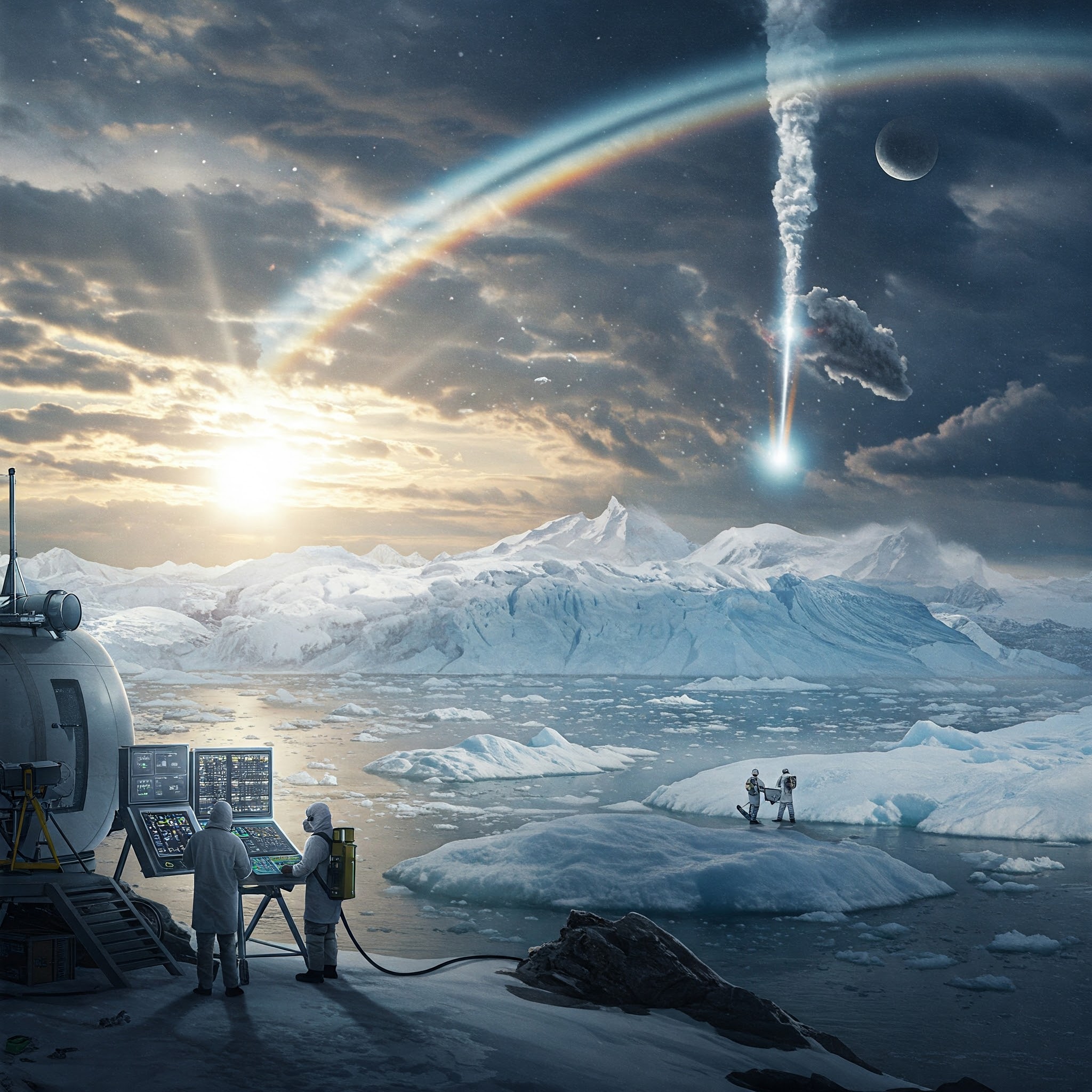
Geoengineering intervention over polar ice caps.


Geoengineering refers to the deliberate manipulation of Earth’s climate systems to counteract the effects of global warming. The two main branches are:

  • Carbon Dioxide Removal (CDR): Techniques that remove CO2 from the atmosphere.

  • Solar Radiation Management (SRM): Methods that reflect a portion of the sun’s energy back into space.

Stratospheric aerosol injection falls under SRM and involves dispersing reflective particles, like sulfur dioxide, into the stratosphere to simulate the cooling effects of volcanic eruptions.

The Polar Strategy: A New Geoengineering Frontier

Traditionally, SRM has been modeled on a global scale. However, recent research suggests that concentrating these efforts over the Arctic and Antarctic could offer more targeted and faster results. This polar-focused geoengineering strategy involves releasing aerosols above the polar regions to reflect sunlight and reduce regional temperatures.


Why the Poles? The Science Behind the Strategy

Melting Ice and Rising Seas

The polar regions are warming faster than the rest of the planet, a phenomenon known as "polar amplification." This rapid ice melt contributes significantly to global sea-level rise and can disrupt ocean circulation patterns.

Climate Feedback Loops

The melting of ice reduces surface reflectivity (albedo), causing more sunlight to be absorbed by the ocean, leading to further warming. Cooling the poles could help break this vicious cycle.

Localized Cooling Effects

Targeting the poles could allow for more precise control over climate intervention, potentially avoiding some of the global side effects associated with full-scale geoengineering.


Stratospheric Aerosol Injection: How It Works

Volcanic Inspiration

Historical data from volcanic eruptions, such as Mount Pinatubo in 1991, show that sulfur aerosols can significantly cool the planet by reflecting sunlight. Scientists aim to replicate this effect using aircraft or balloons to disperse particles into the upper atmosphere.

Engineering the Injection

A key technical challenge lies in delivering the particles precisely and consistently at high altitudes. Proposed solutions include high-altitude aircraft, rockets, or stratospheric balloons.

Potential Aerosol Materials

  • Sulfur dioxide: Most commonly proposed due to its proven cooling effects.

  • Calcium carbonate: Considered less harmful to ozone.

  • Titanium dioxide: Offers higher reflectivity.


Benefits of Polar-Targeted Geoengineering

Slowing Ice Melt

Localized cooling could directly reduce the melting rates of glaciers and sea ice, thereby stabilizing sea levels.

Preserving Permafrost

Cooling the Arctic could prevent the thawing of permafrost, which releases methane—a potent greenhouse gas—into the atmosphere.

Stabilizing Global Climate

Slowing polar warming may help maintain stable weather patterns and prevent disruptions in jet streams and ocean currents.

Faster Results

Compared to CO2 reduction strategies, polar geoengineering could deliver visible results in a shorter timeframe, offering a potential emergency response tool.


Risks and Unknowns: The Other Side of the Coin

Weather Disruptions

Altering regional temperatures can have ripple effects on global weather systems, potentially causing droughts, floods, or unseasonal storms elsewhere.

Impact on the Ozone Layer

Certain aerosols, particularly sulfur dioxide, can deplete ozone, increasing the risk of harmful ultraviolet radiation reaching Earth's surface.

Ecological Side Effects

Polar ecosystems are delicate and may be sensitive to even minor climatic changes. The long-term effects of geoengineering on flora and fauna remain uncertain.

Ethical and Geopolitical Concerns

Who controls the thermostat? Geoengineering raises questions about governance, international cooperation, and potential weaponization of weather.


What Does the Research Say?

Modeling Outcomes

Recent climate models indicate that polar SAI could effectively lower temperatures in the Arctic and Antarctic without causing extreme precipitation changes elsewhere. However, long-term simulations are still limited.

Mixed Expert Opinions

  • Supporters argue that the method could buy time to reduce emissions.

  • Critics warn against "moral hazard," where reliance on geoengineering might delay necessary mitigation efforts.

Need for Field Testing

Small-scale, controlled experiments may be required to better understand aerosol behavior and atmospheric chemistry, but such tests are controversial and tightly regulated.


Global Governance and Policy Challenges

Current Legal Frameworks

There are no comprehensive international treaties governing geoengineering. The London Convention and the Convention on Biological Diversity have issued non-binding guidelines.

Calls for Oversight

Experts urge the formation of a global regulatory body to oversee geoengineering research and potential deployment, emphasizing transparency, inclusivity, and scientific integrity.

Public Perception and Engagement

Clear communication and public engagement are critical. Misinformation and distrust could hinder research and policy decisions.


The Road Ahead: Research, Regulation, and Responsibility

Emphasizing Research First

Before considering implementation, extensive research is essential to assess efficacy, safety, and unintended consequences.

Combining With Emissions Reductions

Geoengineering should not replace traditional climate strategies but serve as a complementary tool in an integrated climate response.

Building International Consensus

Any future deployment would require a unified global agreement and robust mechanisms for monitoring, evaluation, and accountability.


Conclusion: A Promising Yet Perilous Path

Polar-targeted geoengineering represents a bold frontier in the battle against climate change. With its promise of rapid results and localized cooling, it could play a crucial role in preserving Earth’s most vulnerable regions. However, the approach is laden with uncertainties, potential ecological impacts, and ethical dilemmas.

As the planet inches closer to critical climate tipping points, the debate over geoengineering is no longer hypothetical. It is imperative that the global community approaches this powerful tool with caution, scientific rigor, and a steadfast commitment to sustainability and justice.

In the end, while cooling the poles may offer a temporary reprieve, the long-term solution still lies in transforming our energy systems, preserving natural ecosystems, and rethinking our relationship with the planet.