Showing posts with label cleantechnology. Show all posts

Monday, 5 May 2025

Stabilizing Perovskite Solar Cells: New Breakthroughs for Long-Term Efficiency

Perovskite solar cells (PSCs) have gained global attention for their high efficiency and low manufacturing costs. Despite these advantages, one major barrier to widespread commercialization remains: instability under real-world conditions. Researchers are now working on innovative methods to make these next-generation solar cells more durable, paving the way for more reliable and scalable clean energy solutions.


What Makes Perovskites So Special?

Perovskite solar panel with transparent ionic salt layer.


Perovskites are a class of materials with a unique crystal structure that makes them excellent at absorbing sunlight. Their benefits include:

  • High power conversion efficiency (up to 25%+ in lab conditions)

  • Low-cost and solution-based fabrication

  • Lightweight and flexible potential for various applications

However, they are extremely sensitive to moisture, oxygen, heat, and UV light, which causes them to degrade rapidly in the field.


Key Stability Issues in PSCs

  1. Moisture Degradation
    Humidity causes perovskite materials to decompose into lead iodide, reducing performance.

  2. Thermal Instability
    Many perovskite structures break down at elevated temperatures, making them unsuitable for hot climates.

  3. Photodegradation
    Exposure to light—especially UV—can trigger chemical reactions that destabilize the material.


Breakthroughs in Stabilizing Perovskite Solar Cells

High-tech perovskite solar panel with glowing ionic shield in lab.


🧪 1. Surface Passivation with Ionic Salts

Scientists have discovered that adding ionic salts such as potassium iodide (KI) during fabrication helps passivate the surface and grain boundaries of the perovskite layer. This reduces defect sites and improves structural integrity, extending the operational lifespan of PSCs.

🧬 2. 2D/3D Hybrid Structures

Introducing 2D perovskite layers on top of 3D perovskite cells creates a protective interface that shields the underlying material from environmental stress. These hybrid structures demonstrate enhanced moisture and thermal stability without compromising efficiency.

🌫️ 3. Encapsulation Techniques

Advanced encapsulation materials, like flexible glass or polymer barriers, protect PSCs from external elements. Some companies are developing self-healing coatings that repair micro-cracks caused by wear and tear.

🔬 4. All-Inorganic Perovskites

Replacing the organic components in perovskite formulations with inorganic counterparts (e.g., cesium lead halides) makes them less reactive and more thermally stable, although they currently offer slightly lower efficiencies.


Why Stability Matters for Commercialization

While lab efficiencies are impressive, real-world application depends on durability and performance over time. A typical solar panel is expected to last 25+ years—something current perovskites struggle to achieve. These new stabilization techniques are critical to make perovskite solar cells viable for:

  • Rooftop solar

  • Flexible solar panels for wearables

  • Building-integrated photovoltaics (BIPV)

  • Off-grid and portable solar solutions


Future Outlook: Scaling with Confidence

With these recent advancements, the solar industry is moving closer to realizing commercial-grade perovskite modules. Combining stability with scalability will open new avenues for low-cost, high-performance clean energy worldwide. Researchers are now focusing on:

  • Scalable manufacturing methods like roll-to-roll printing

  • Lead-free alternatives for eco-friendly deployment

  • Integration with tandem solar cells for even higher efficiency


Conclusion: A Brighter, More Stable Solar Future

Stabilizing perovskite solar cells is not just a scientific milestone—it's a climate imperative. As research continues to push boundaries, perovskites are inching closer to becoming a mainstream solution for a sustainable energy future. With ionic salts, hybrid structures, and robust encapsulation, the next era of solar technology looks promising—and more permanent.

Tuesday, 22 April 2025

Do Solar Panels Work on Cloudy and Rainy Days? Here's the Truth

 Solar power has become a major player in the global energy game, but one question keeps popping up:

“Do solar panels work on rainy days?”

It’s a common concern—after all, if solar panels rely on sunlight, wouldn’t a lack of sunshine make them useless in rainy or cloudy weather?

In reality, this is one of the biggest myths in solar energy. The truth is: solar panels do work during cloudy and rainy days, just not at full capacity. Thanks to advanced solar engineering, innovative technologies, and smart grid integration, solar systems today are far more capable than most people realize.

Solar-paneled house in the rain, still generating clean energy.


In this blog, we’ll explore how solar panels work in low-light conditions, examine real-world data, and uncover how you can make the most out of your solar setup—even when the skies are grey.

How Solar Panels Generate Power: A Quick Science Refresher

Solar panels convert sunlight (not heat) into electricity using photovoltaic (PV) cells, usually made from silicon. These cells work by:

  1. Absorbing photons (light particles) from sunlight

  2. Releasing electrons through the photoelectric effect

  3. Creating an electric current that can be used or stored

The key here is that light—not heat—is required. That means even diffused sunlight on a rainy or cloudy day can still be harnessed by solar panels.

Do Solar Panels Work on Rainy Days? Yes—But Here's the Catch

✅ They Work—But at Lower Efficiency

On rainy days, solar panels typically produce between 10% and 25% of their rated capacity, depending on cloud density and rain intensity. Even during overcast days, there’s still ambient or diffused light, which PV cells can use.

⚡ Rain Has a Silver Lining

Rain may reduce solar power production temporarily, but it also cleans dust, pollen, and debris off the surface of solar panels, improving efficiency in the long run.

Factors That Affect Solar Panel Performance in Rainy Weather

1. Type of Solar Panel

  • Monocrystalline panels (usually black) tend to perform better in low-light conditions.

  • Thin-film panels have lower efficiency but are more flexible in light variation.

  • Bifacial panels can absorb light from both sides, improving efficiency on reflective surfaces, even in cloudy conditions.

2. Geographical Location

  • Cities like Seattle or London—known for cloudy skies—still successfully use solar energy due to smart system design and good energy storage.

  • Tropical areas with frequent afternoon showers often get plenty of sun in the morning.

3. Panel Orientation and Tilt

Proper angle and orientation allow panels to maximize sunlight capture, especially in low-light conditions.

4. Inverter Quality

High-efficiency inverters (like microinverters) perform better in diffused light, ensuring better conversion of solar energy.

Real-World Examples: Solar in Rainy Cities

🌧️ Germany: The Solar Powerhouse of Cloudy Europe

Despite its grey skies, Germany is a global leader in solar power thanks to:

  • Government incentives

  • Energy-efficient grid integration

  • Advanced panel technologies

🌦️ Japan and South Korea

These countries experience significant rainfall but still boast robust solar infrastructure and increasing reliance on solar + storage systems.

🌩️ Kerala, India

With 150+ rainy days a year, Kerala still promotes solar energy due to:

  • Rooftop solar subsidies

  • Efficient use of morning sunlight

  • Hybrid solar inverters that store excess energy

How Solar Systems Are Engineered to Handle Rainy Days

🔋 Battery Storage is the Game-Changer

Storing excess electricity produced on sunny days allows you to use solar power when the panels aren't generating much—like during rain or at night.

Popular solar batteries include:

  • Tesla Powerwall

  • LG Chem RESU

  • Sonnen Eco

🔌 Hybrid Solar Systems

Hybrid systems combine:

  • Solar panels

  • Battery backup

  • Grid connection

They can switch power sources automatically and ensure uninterrupted supply, even on dark, stormy days.

🧠 Smart Inverters + AI Integration

Modern inverters paired with AI and machine learning:

  • Forecast weather

  • Predict demand

  • Manage grid interactions

  • Optimize performance during cloudy weather

Emerging Tech: Solar Innovations That Beat the Clouds

☁️ Low-Light and Transparent Panels

Research in materials like perovskite and quantum dots is enabling panels to generate electricity even from:

  • Ambient indoor light

  • Shaded areas

  • Reflected light during cloudy conditions

💧 Rain-Activated Solar Panels

Experimental panels under development can generate power from raindrops using triboelectric nanogenerators (TENG). While still in R&D, this technology could revolutionize solar in rainy regions.

Myths vs. Facts: Clearing Up Solar Confusion

Myth

Fact

Solar panels don’t work without sunlight

They still work using diffused light

Rainy climates can’t use solar

Germany and UK prove otherwise

Solar systems shut down in rain

Systems continue at reduced output

Solar is only viable in deserts

It works globally with good design


Practical Tips to Maximize Solar Performance on Rainy Days

  1. Install high-efficiency monocrystalline panels

  2. Invest in a battery backup system

  3. Use weather forecasting AI tools

  4. Clean panels regularly to improve efficiency

  5. Consider panel tilt adjustments for local weather

  6. Opt for hybrid systems that combine solar and grid

  7. Apply for state or national solar subsidies to offset cost

The Economics of Rainy Day Solar: Is It Still Worth It?

Absolutely. While rainy days may lower production temporarily, the annual average yield is what truly matters. A well-designed solar system will:

  • Pay back investment in 4–7 years (depending on location)

  • Last 25+ years

  • Reduce grid dependence

  • Increase property value

Even with 100+ cloudy or rainy days annually, the ROI remains strong—especially with subsidies and net metering.

Conclusion: Solar Power Doesn’t Stop When It Rains

While rain and clouds may slow down solar energy production, they don’t stop it. With today’s advanced solar panels, smarter inverters, and energy storage solutions, solar is not only viable in rainy climates—it can thrive there.

The key is smart system design, good quality components, and leveraging storage technology. So the next time someone asks, “Does solar work on rainy days?”—you can confidently say:
Yes, it does. And it's smarter than ever.


✍️ Author’s Note:

 I’ve seen many misconceptions surrounding solar power. This blog aims to bust one of the biggest myths—that solar panels don’t work on cloudy or rainy days. As we move toward a greener future, understanding the true potential of solar energy in all weather conditions is crucial. I hope this piece empowers you to make informed energy choices, rain or shine.

Tuesday, 8 April 2025

Namibia's Green Hydrogen Vision: Pioneering Sustainable Energy Leadership in Sub-Saharan Africa

As the world races to curb carbon emissions and shift to sustainable energy sources, Namibia is emerging as a surprising yet powerful player in the green hydrogen space. With vast solar and wind resources, a stable political environment, and strategic geographical positioning, Namibia has the potential to lead green hydrogen production in Sub-Saharan Africa. This clean fuel, created through renewable energy-powered electrolysis, positions the country not just as a renewable energy hub but also as a blueprint for energy innovation and economic diversification across the region.

This blog explores how Namibia is shaping its green hydrogen future, the role of Localized Innovation and Adoption Strategies (LIAS), and the broader implications for the African continent and global energy markets.

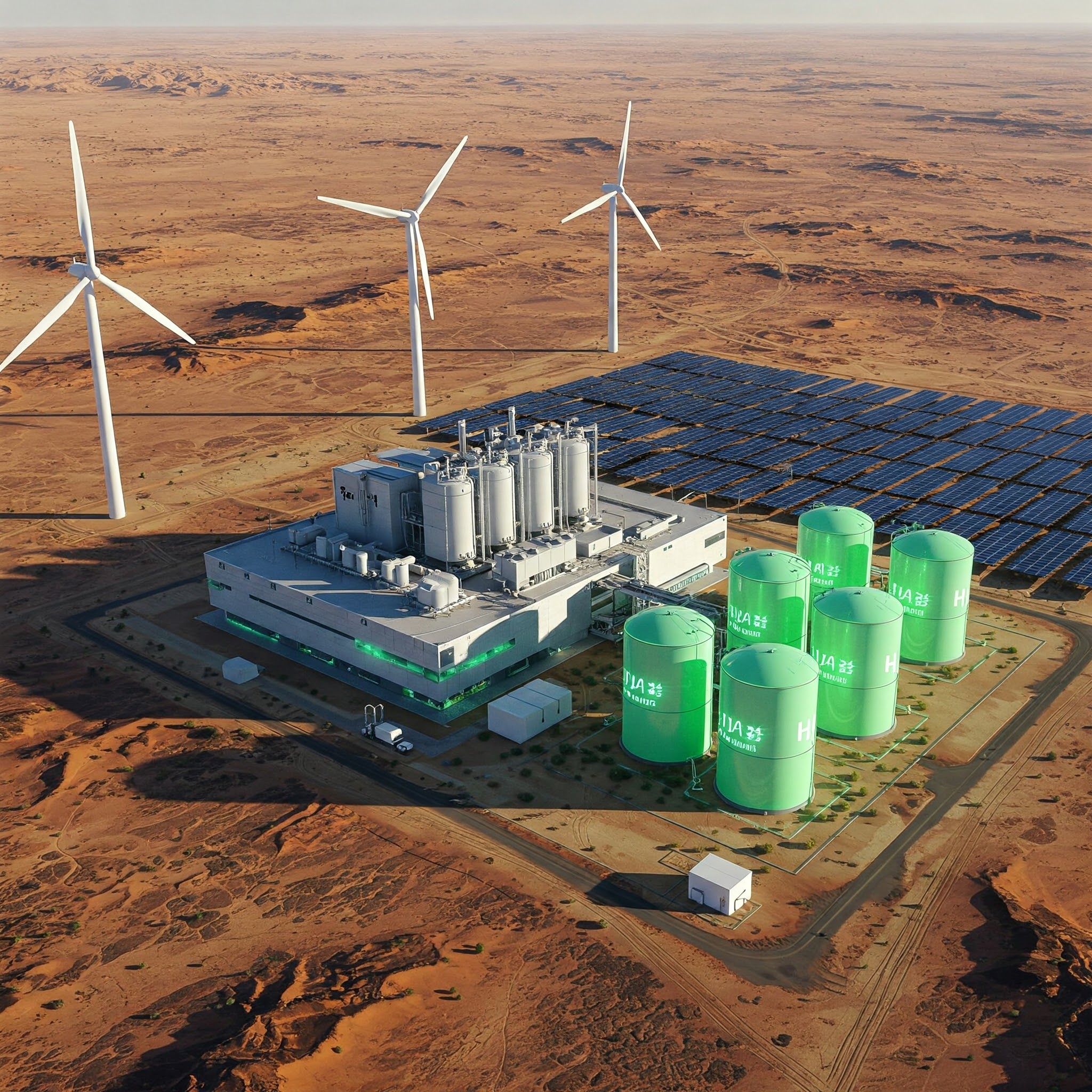
A futuristic energy facility in Namibia's desert landscape, featuring solar panels, wind turbines, and green hydrogen electrolysis units.


Understanding Green Hydrogen and Its Global Significance

Green hydrogen is produced by splitting water molecules (H2O) into hydrogen and oxygen using renewable energy sources like solar or wind power. Unlike grey or blue hydrogen, green hydrogen emits no greenhouse gases during production, making it an ideal candidate for a low-carbon future. It has applications across transportation, industrial heating, power generation, and even fertilizer production.

As countries strive to meet climate goals set by the Paris Agreement and other global frameworks, green hydrogen is rapidly becoming central to decarbonization efforts. Europe, Asia, and parts of North America are investing billions into hydrogen economies. In this context, Namibia’s renewable potential and ambitious policy framework place it in a strong position to become a key supplier to hydrogen-hungry markets.


Why Namibia? Natural Advantages for Green Hydrogen

Namibia’s green hydrogen opportunity is rooted in its natural and infrastructural advantages:

  • Abundant Renewable Resources: Namibia receives over 3,000 hours of sunshine annually and has extensive coastal winds, both ideal for powering electrolysis processes.

  • Low Population Density: With ample uninhabited land, Namibia can host large-scale renewable energy farms without major displacement or land-use conflicts.

  • Proximity to Key Markets: Its Atlantic coastline offers strategic access to European and global shipping lanes, enhancing export capabilities.

  • Stable Governance: Namibia boasts political stability, transparent institutions, and investor-friendly policies, all of which attract international energy investments.


Namibia’s Strategic Moves in Green Hydrogen

In recent years, Namibia has taken concrete steps to realize its hydrogen vision:

  1. Government Initiatives: The Namibian government launched the "Harambee Prosperity Plan II," which includes a strong focus on green hydrogen as part of its economic transformation agenda. The Green Hydrogen Council and Hydrogen Commissioner were appointed to oversee development and partnerships.

  2. Hyphen Hydrogen Energy Project: One of the flagship projects is the $10 billion Hyphen Hydrogen Energy initiative in the Tsau //Khaeb National Park. It aims to produce 300,000 tons of green hydrogen annually by 2030, creating jobs and boosting GDP.

  3. International Collaborations: Namibia is partnering with countries like Germany and institutions such as the European Investment Bank. These collaborations offer financing, technical expertise, and long-term purchase agreements.


Localized Innovation and Adoption Strategies (LIAS): A Catalyst for Success

To successfully implement and sustain a green hydrogen economy, Namibia must overcome several systemic challenges — from technology transfer and skills development to infrastructure gaps and policy integration. This is where the concept of Localized Innovation and Adoption Strategies (LIAS) becomes critical.

What is LIAS?

LIAS is a strategic framework designed to:

  • Foster indigenous innovation by adapting global technologies to local contexts

  • Bridge gaps between academic research, industry needs, and policy objectives

  • Empower local communities through inclusive participation and upskilling

  • Ensure that technological ecosystems align with national development goals

Applying LIAS in Namibia:

  1. Capacity Building: Collaborations with universities and technical institutions can train a local workforce equipped to handle hydrogen technologies, operations, and maintenance.

  2. Policy Synchronization: Coordinated efforts between ministries—energy, environment, trade, and education—are necessary to support consistent regulations and investment conditions.

  3. Local Ownership and Inclusion: Ensuring that local communities benefit from infrastructure, employment, and revenue-sharing models will foster public support and long-term sustainability.

  4. Data and Knowledge Sharing: Creating research centers and open-access databases can help monitor progress, share best practices, and improve decision-making across sectors.


Economic Impact: Diversification and Job Creation

Namibia’s economy has long been dependent on mining, agriculture, and tourism. Green hydrogen offers a chance to diversify the national income base while improving energy security. Here’s how:

  • GDP Growth: Green hydrogen exports could contribute significantly to GDP, attracting foreign direct investment and increasing trade revenues.

  • Employment: Construction, operations, and maintenance of renewable energy and hydrogen plants will create thousands of direct and indirect jobs.

  • SME Development: A thriving hydrogen sector will support small and medium enterprises in construction, logistics, education, and innovation.


Environmental Benefits: A Carbon-Neutral Opportunity

Unlike fossil fuels, green hydrogen production and use have minimal environmental footprints. For Namibia:

  • Reduced Emissions: Local adoption of hydrogen can reduce reliance on imported fossil fuels.

  • Desalination Synergy: Electrolysis processes can be paired with desalination plants to provide clean water to arid regions.

  • Climate Leadership: Namibia can position itself as a model for other African nations, advocating for clean technologies while building climate resilience.


Challenges Ahead: What Needs to Be Addressed

Despite the promise, several challenges must be tackled:

  • High Capital Costs: Developing green hydrogen infrastructure is capital-intensive. Continued international support is crucial.

  • Water Scarcity: Electrolysis requires water, and Namibia is an arid country. Investment in desalination and water recycling is needed.

  • Grid Infrastructure: Energy produced must be transported reliably. Investments in transmission lines and grid expansion are necessary.

  • Regulatory Frameworks: Clear, consistent, and investor-friendly policies will drive confidence and long-term commitment.


The Role of International Cooperation and Climate Agreements

Namibia’s hydrogen vision is aligned with global climate agreements like the Paris Accord. International collaboration offers not just funding but also market access and technical support.

Key Partnerships:

  • Germany-Namibia Agreement: Germany has pledged millions in support and technical assistance.

  • EU-Africa Green Energy Partnership: Namibia is expected to benefit from the EU’s push for clean energy imports.

  • Private Sector Engagement: Companies like Siemens, Hyphen, and global renewable energy players are actively engaging with Namibian authorities.


A Regional Model: Inspiration for Sub-Saharan Africa

Namibia’s green hydrogen development could set a precedent for other African nations:

  • Replicability: Similar resource-rich countries (like Botswana, Angola, and South Africa) could adopt Namibia’s model.

  • Knowledge Transfer: Namibia can become a training and knowledge-sharing hub.

  • Pan-African Energy Corridors: Cross-border cooperation could lead to a continent-wide green energy grid, reducing costs and increasing resilience.


Conclusion: A Vision Within Reach

Namibia is not just jumping on the green hydrogen bandwagon — it’s driving it. With proactive leadership, strategic investments, and community engagement through frameworks like LIAS, Namibia can redefine its energy landscape and set an example for the rest of the world. The journey ahead will require grit, innovation, and cooperation, but the destination—a sustainable, inclusive, and prosperous green economy—is within reach.